My Bank or Employer Got a Grand Jury Subpoena About Me. What Does That Mean?
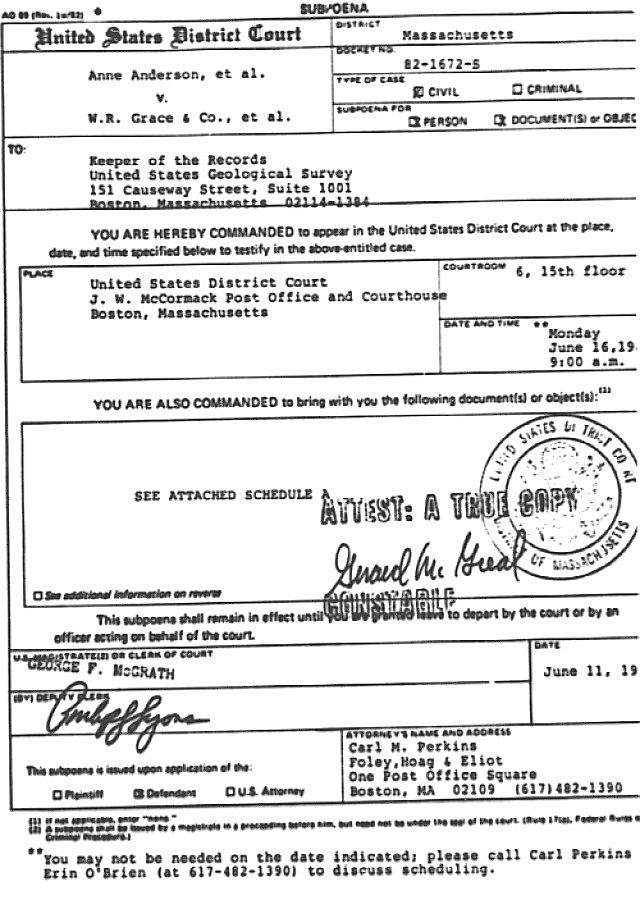

The short answer: A grand jury subpoena to your bank, employer, accountant or business partner usually means you are a subject, and possibly a target, of a federal criminal investigation. You generally can't stop a third party from producing your records. But learning about the subpoena early gives you time to get a lawyer, find out your status, and shape what happens next.
Many never do until much later. When people do find out, it's usually one of these ways:
An employer, accountant or business partner mentions they were served
A bank closes an account or freezes activity without much explanation
A copy of a subpoena turns up in a document production or a lawsuit
Agents interviewing a colleague ask about you by name
Banks often aren't allowed to tell you. Federal law generally bars financial institutions from notifying customers about a grand jury subpoena for their records. If your bank did say something, it may have been through account actions rather than words.
You are probably a focus. Prosecutors subpoena a person's own financial records when that person's conduct is under investigation.
The government is following money. Bank records let investigators trace funds, identify other people involved, and calculate "loss."
The case is likely in its documentary phase. Subpoenas to third parties often come before witness interviews and, eventually, a target letter or charges.
Usually not. People generally have no Fourth Amendment privacy interest in records held by their bank, and grand jury subpoenas are presumed reasonable. There are important exceptions, chiefly attorney-client privileged material held by others. A lawyer can sometimes negotiate the scope with prosecutors or raise privilege issues.
Call a federal criminal defense lawyer. Do this immediately. Your lawyer can contact the prosecutor to learn your status, whether witness, subject or target, and the focus of the investigation.
Preserve everything. Don't delete, alter or move records, messages or files. Obstruction charges are often easier to prove than fraud.
Don't contact the people who were subpoenaed to ask what they produced or said. It can look like witness tampering.
Don't move money in unusual ways. Large transfers after learning of an investigation can be portrayed as concealment and may affect forfeiture.
Plan ahead. A target letter, agent visit or your own subpoena may be next. Deciding your approach now puts you ahead.
Will the bank tell me if my records were subpoenaed? Often not. Banks are generally prohibited from disclosing grand jury subpoenas for customer records.
Does a subpoena to my employer mean I'll be fired? Not necessarily, but employers often react cautiously. Your lawyer can advise you on how to handle conversations at work.
Can my lawyer find out what was subpoenaed? Sometimes. Prosecutors may share the scope of the investigation with defense counsel, and third parties may share what they produced.
Is it too early to hire a lawyer? No. This is often the best time, before you're charged and before you've spoken with agents.
If you need a lawyer to defend you in a federal criminal investigation, Newman Litigation is prepared to help protect your rights, reputation, and future. From the firm's office in Brooklyn, New York, Newman Litigation serves clients throughout the United States. Contact Will Newman today at (718) 218-3360 to set up a free consultation.
Related posts: Grand jury subpoenas · Target letters · Contact us
Attorney Advertising. This post is general information, not legal advice, and reading it does not create an attorney-client relationship. Prior results do not guarantee a similar outcome.